

From my hands to yours.
When I was a child, I used to spend hours in my grandmother's workshop in Paris.
There were pots of paint everywhere. Brushes, heat guns, samples, chemicals… chairs, mirrors hanging off the wall. All of it was like an ecosystem. A symphony.
My grandmother and my mother were Artisan Laqueur, they restored antique furniture using techniques involving paint made from rabbit skin. Through their technique, they would bring back to their original state furniture as old as the 15th or 16th century, repair a mirror’s broken moldings, or replicate the texture and color variations of marble tops entirely freehand.
And sometimes, when my mother was restoring the gold leaf on a mirror, tiny flecks of gold would catch the air and just — float.
Being around people who work with their hands was my norm. Though I wanted to do something different, and it took me about twenty years to find my way back to a workshop.
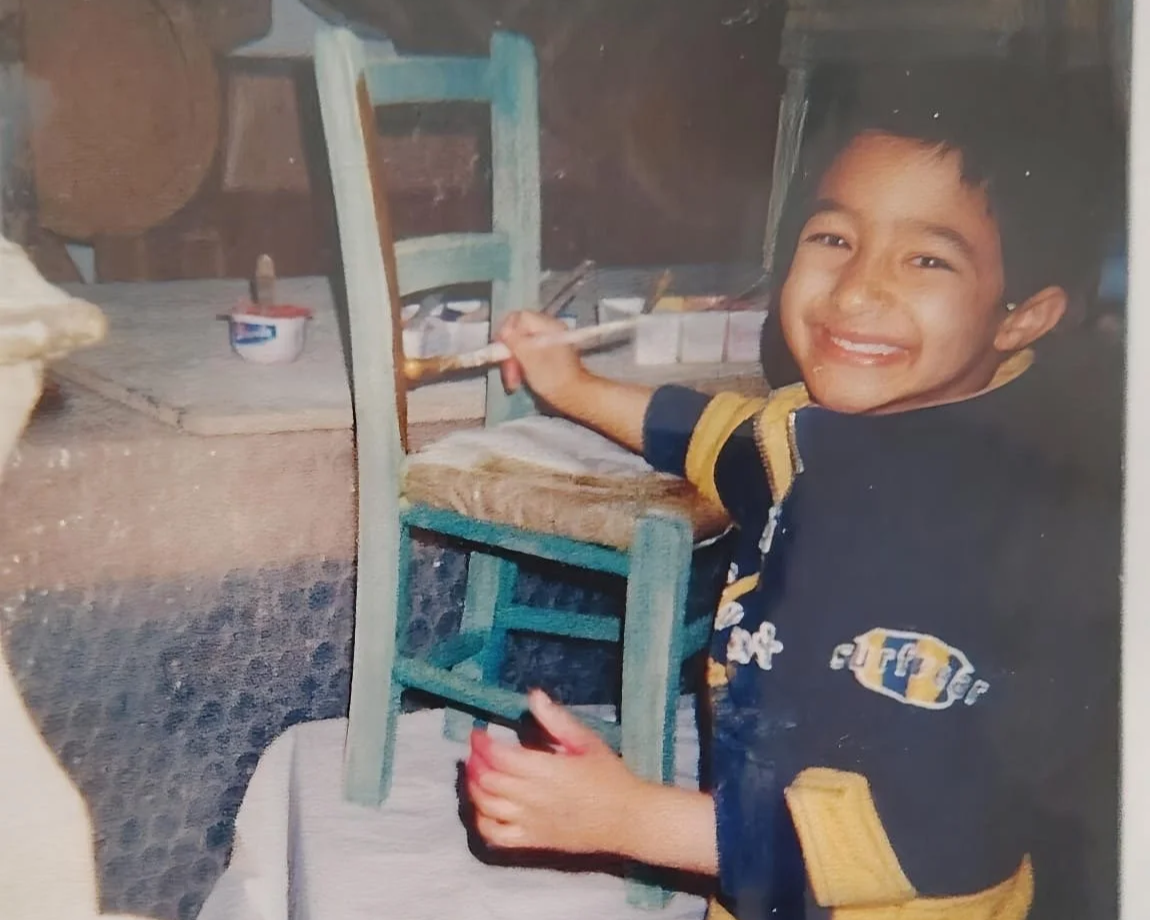
Little me working on a chair at the workshop.
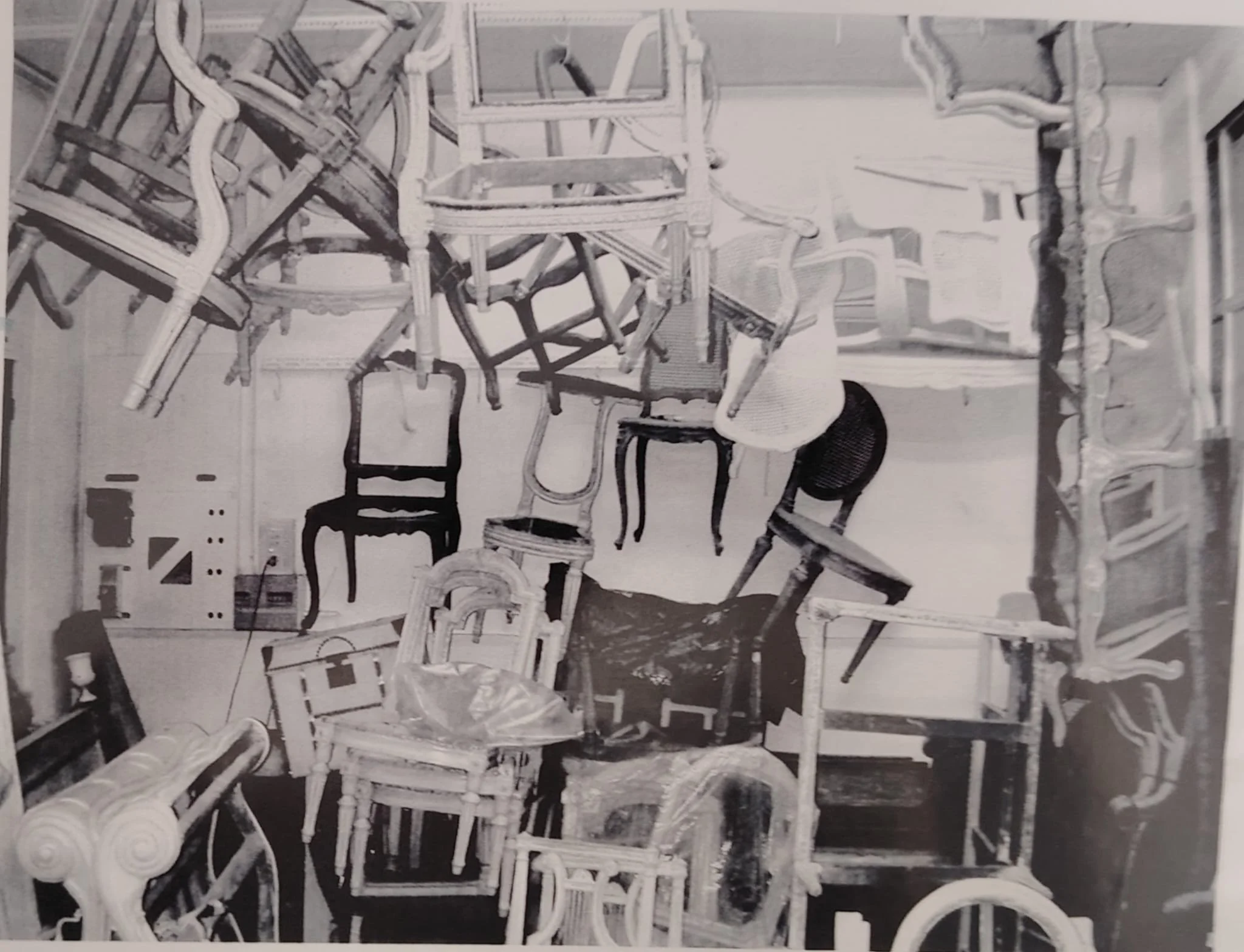
Furniture floating around my grandmother’s workhop
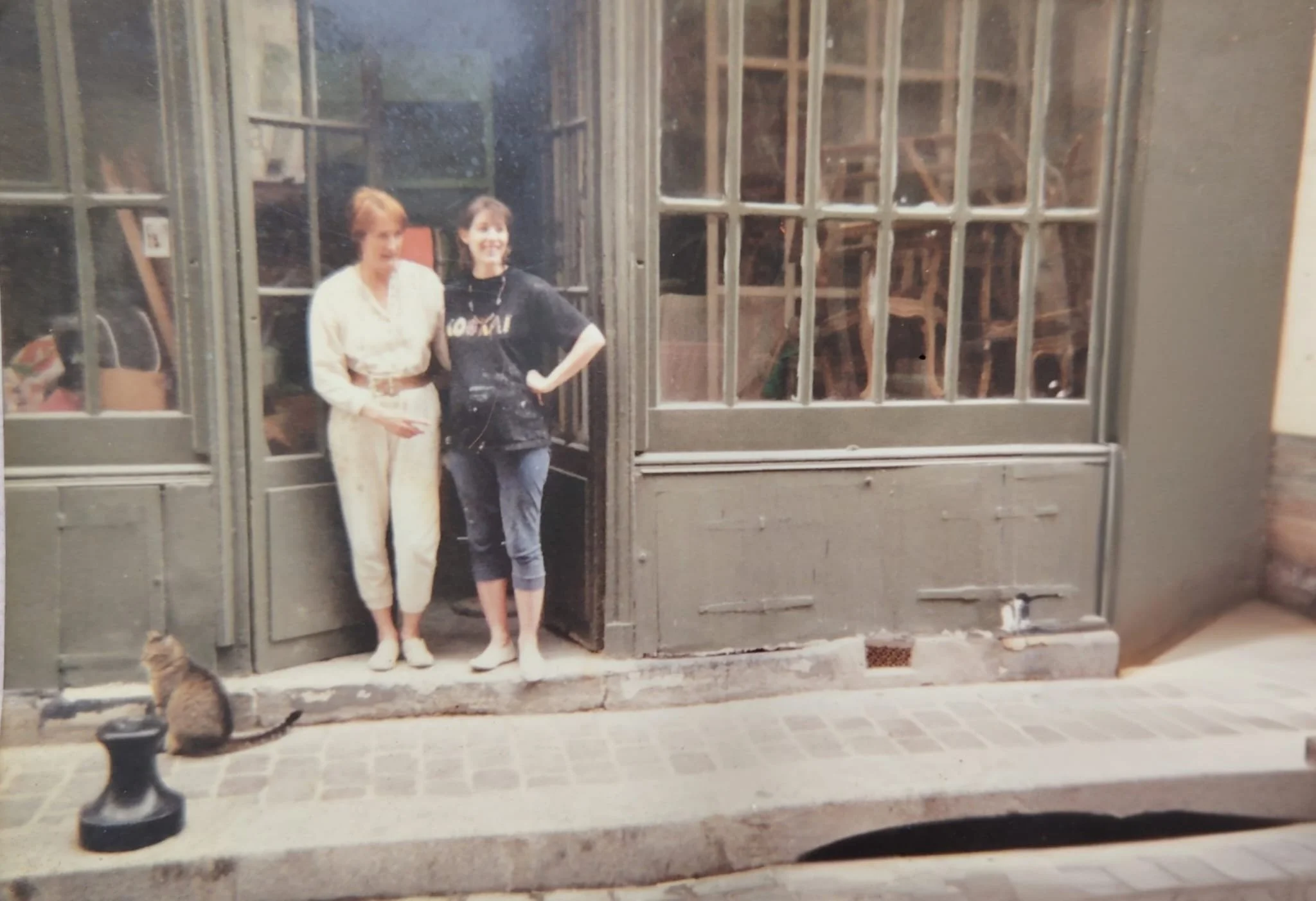
My mom and Grandmother at their Atelier (workshop) in Paris, Rue de Lappe.
In 2025, my best friends gifted me a private lesson at a ceramics studio; that’s when I sat down at a pottery wheel for the first time.
Part of what hooked me is how old this art is — one of the first things humans ever made that could last. Clay is basically dirt turned to human legacy. The tradition itself is passed from hand to hand, human to human, across centuries. I love that what I’m doing is new to me but old to the world.
What I also didn’t expect is how slow and relational the process is. Clay forces you to wait, to repeat, to fail, to try again. You get attached — every piece ends up carrying a little story: mine, the material’s, and whatever the kiln decides to do with it.
Clay has its own logic, and it teaches me some of the most valuable lessons.
Urgency is the enemy of precision. The moment I started rushing, because I wanted to see the result, because I was impatient with the process, my work collapsed or got ruined.
Imperfection isn't failure. But you have to learn to tell the difference between a flaw that's part of the work and one that breaks it. That judgment is the skill — not the technique.
I'm a perfectionist by nature, but the clay doesn't care. It has taught me, slowly and stubbornly, that some of the most interesting things a piece can become were never part of the original plan. What it has become wasn't the intent.
Learning to see that, to accept it, to even choose it — that's the hardest thing ceramics has asked of me. And the most useful.
I watched my grandmother make that call on every piece she restored. What to keep, what to correct, what the object could absorb, when to stop. She never agonized over it. It was just judgment, built from years of doing.
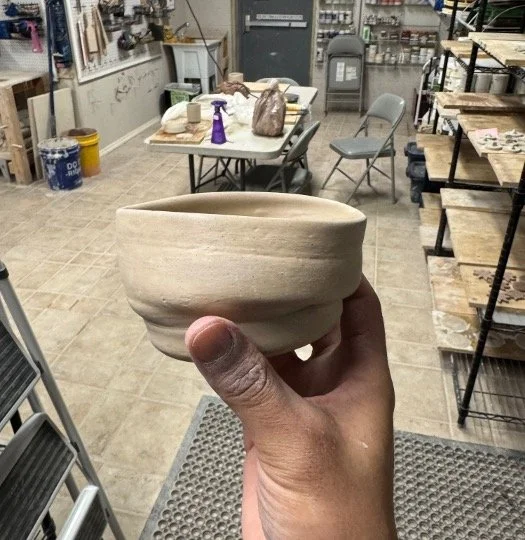
My first pot.
I think differently in the studio.
Not in a kumbaya, wellness-retreat sense.
Differently as in: when my hands are busy, my mind stops trying to fix problems and starts learning to sublimate them. To work with what's there rather than chasing what isn't. A piece veers off course and instead of correcting it back to the original vision, I follow where it went. Sometimes that's where it was always going.
I've been learning adaptability. I don't fully understand the mechanism. But I've stopped questioning it. My grandmother probably never questioned it either. It was just how things worked.
I started ceramics because I needed to make something real. Something that stayed.
What I didn't expect was that sitting down at that wheel would feel less like learning something new, and more like remembering something old.
I'm still figuring out what I'm meant to make. But I know where I learned to use my hands.
From my hands to yours.